Art Residencies and Inter-cultural Understanding
By Mario A. Caro
Art residencies have become a significant part of the global cultural ecosystem. They have evolved from a traditional format that mainly addressed the needs of artists for time and space away from home — a retreat model — to organizations that address multiple cultural and communal needs. Perhaps the most impactful development has been their shift from being merely sites of creative retreat to being active agents in promoting intercultural understanding, a role whose urgency is acute today.
During the last three decades or so, there has been an exponential growth of residencies around the world. Their rapid spread is due to many factors beyond the basic needs of artists. They have become sites for community engagement; stimuli for economic development; hubs for creative industries; agents of cultural diplomacy, etc. In fact, it is their malleability and their ability to simultaneously address the needs of many constituents at once that make them so useful.
Of course, residencies are most useful for artists in developing their professional practice. In fact, a good number of residencies have been established as pragmatic approaches by artists and art collectives to gain access to resources (such as funding, studio, and living spaces) that directly support their practices. About one-fourth of residencies are independent artist-run spaces, small facilities that we have come to term “micro-residencies.”
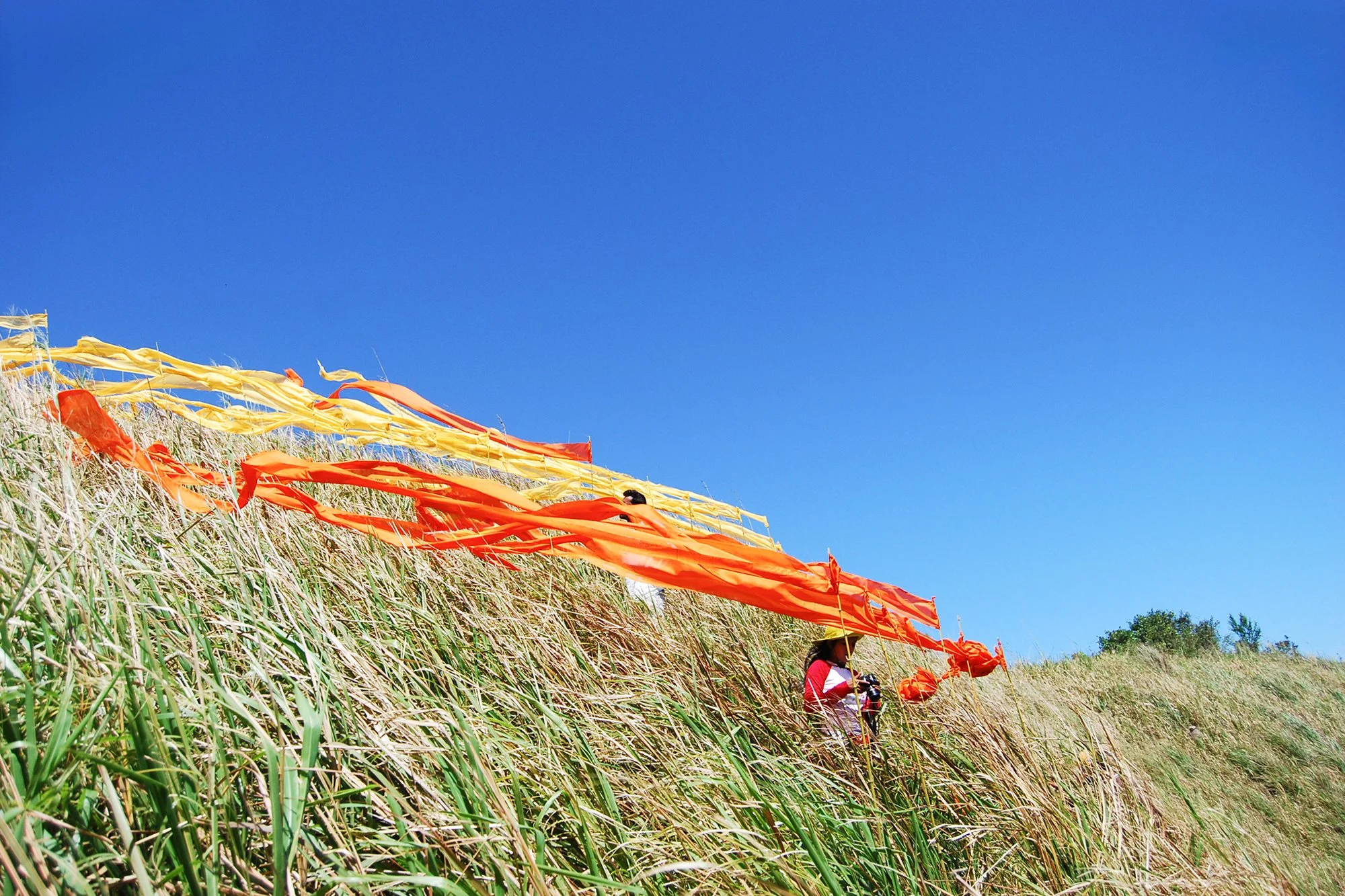
Theertha International Artists’ Workshop, collaboration between Sultana Haukim and Kabir Ahmed Masum Chisty, Kandy, Sri Lanka, 2008.
Photo by Tooraj Khamenehzadeh
However, it is their usefulness beyond the immediate needs of artists that makes these organizations more sustainable than ever before. While residencies are relatively new endeavors in many parts of the globe, for most artists working at the international level, they have become an essential part of developing their professional practice.
Of the various uses for art residencies, which are beyond their role in developing the professional profile of artists, I would like to focus on their function in furthering intercultural understanding. It’s an important aspect of the work of residencies, those that operate at the personal level, engaging the artists, the residency organizers, as well as any community members involved. Inter-cultural understanding also functions as “cultural diplomacy” at the state level and beyond, operating within national and international spheres.
The idea of art as a diplomatic tool, as a means of engaging other societies through the mutually respectful exchange of cultural practices, has been around since the beginning of time, but there are certain conditions today that make this moment a new and timely situation. One of these conditions is the way in which organizations such as residencies — and by extension networks of residencies — are now beginning to very consciously think about their work as a form of diplomacy.
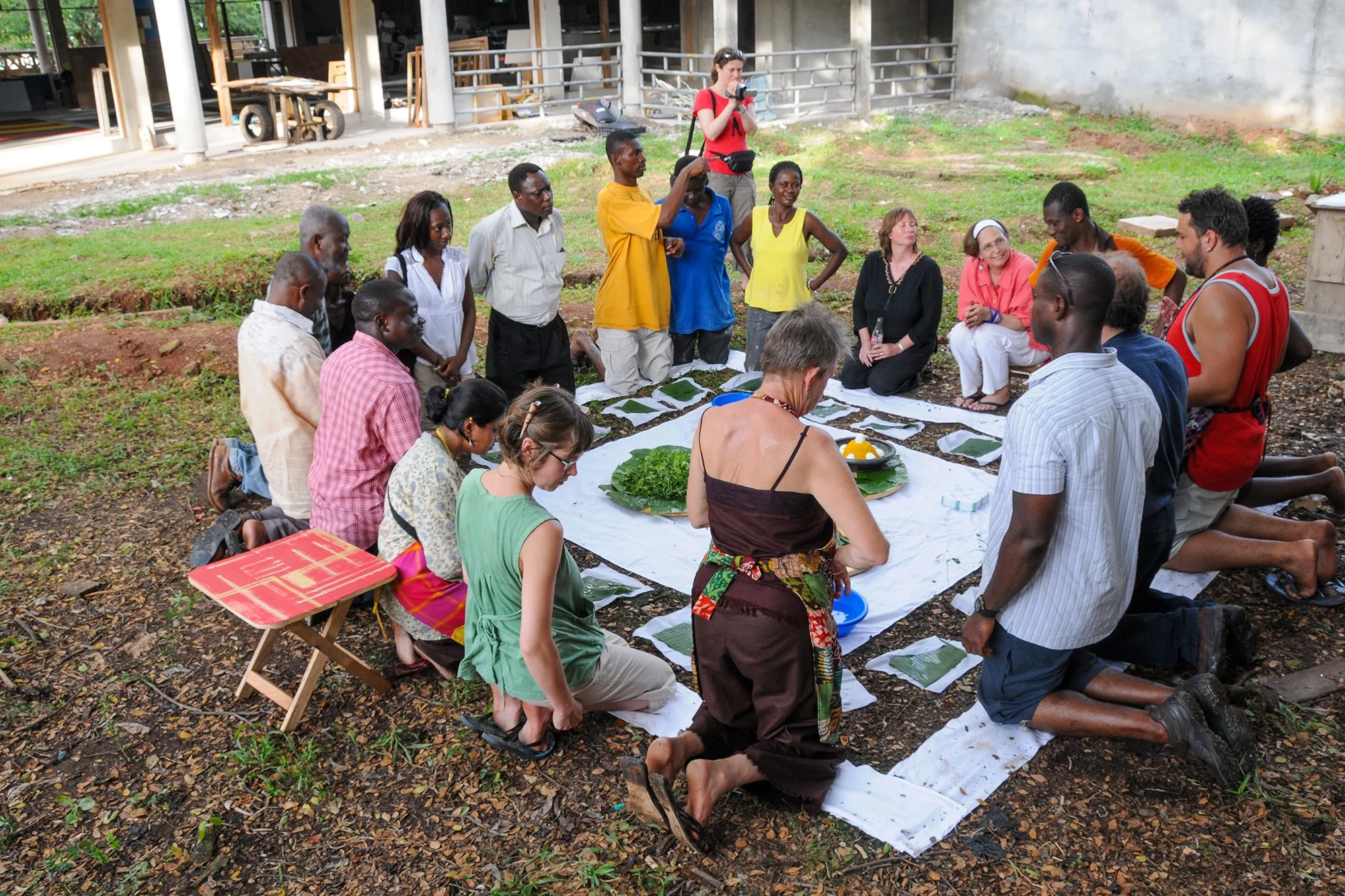
SaNsA International Artists’ Workshop, performance by Jorge Rocha, Kumasi, Ghana, 2009.
Photo by Tooraj Khamenehzadeh
What is diplomacy?
The establishment and nurturing of political, economic, social, environmental, and/or cultural relationships between sovereign nations or communities. These negotiations are usually carried out between independent states and enact autonomy within the international arena.
What kinds of diplomacy are there?
There are a variety of ways in which these relationships can be initiated and maintained. Many of these activities happen through extremely formal channels at the state level. These are often in the form of official meetings and events. These can cover a variety of activities — from large summits to intimate dinner parties. There are, however, also a variety of less official means of relationships to be promoted. These are sometimes referred to as instances of “soft diplomacy.” These can, for example, take the form of sporting events or cultural activities.
Who conducts diplomacy?
At the micro level, one can simply say that we are all ambassadors, that we all do diplomatic work for the various sovereign communities that we belong to and represent. This can range widely, from a general region such as Asia, to the national level, to the level of community, or even families. When it comes to political diplomacy, these are activities that are carefully regulated by selected professionals, namely ambassadors, who are intimately familiar with their own culture and that of the nation they address.
In terms of the topic at hand — cultural diplomacy — one key agent is the artist. It is this subject who often represents their culture through their work. But there are also others involved in these acts of diplomacy — the organizers of events (exhibitions, performances, residencies, etc.) as well as the funders. However, in today’s international art scene, one should carefully consider that the artist as ambassador can be a complex situation. Many of the most successful artists often occupy complicated personal hybrid spaces and identities, and often have homes in more than one country.
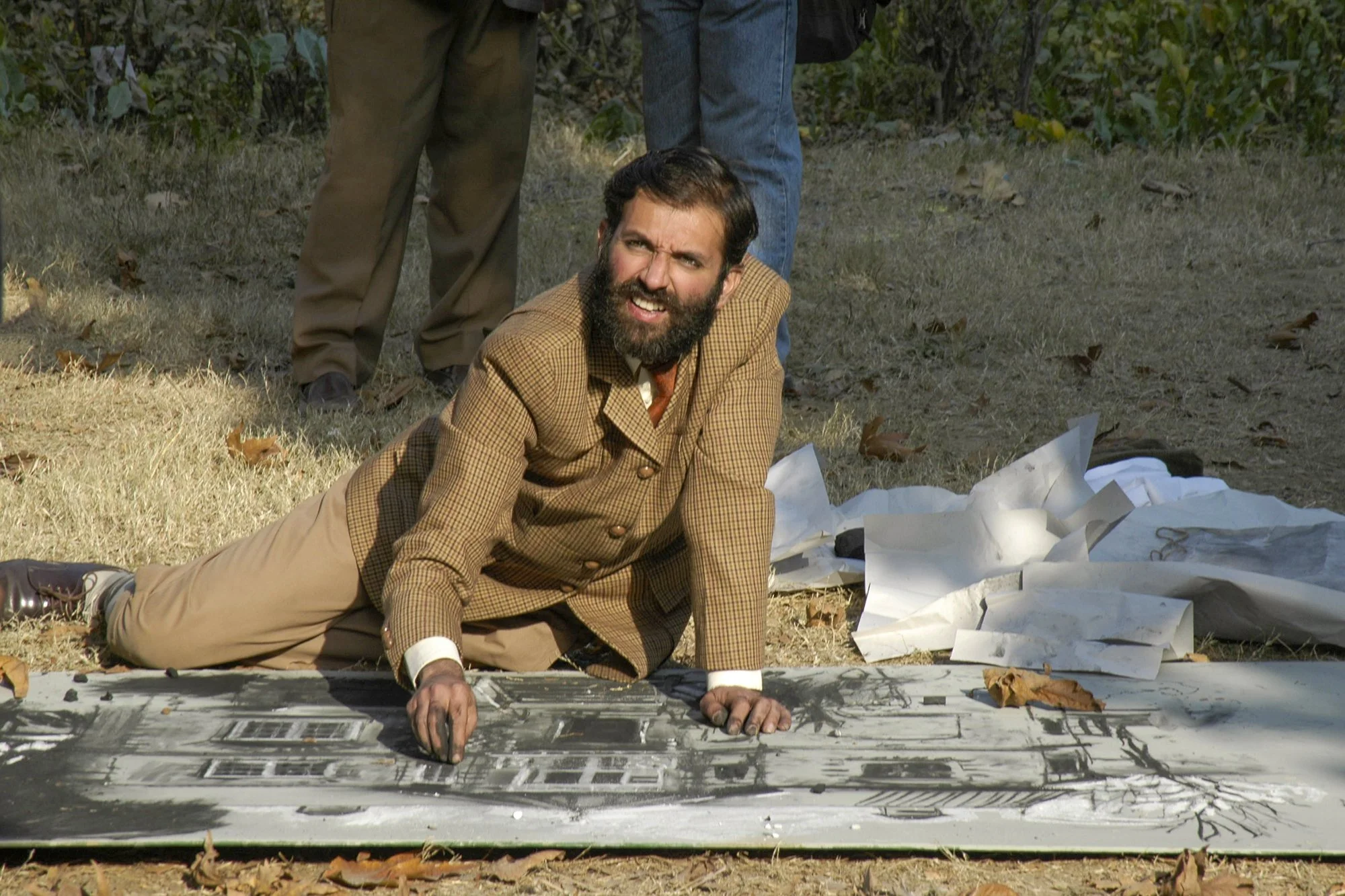
Khoj International Artists’ Workshop, performance by Nikhil Chopra, Kashmir, India, 2007.
Photo by Tooraj Khamenehzadeh
Where does diplomacy take place?
While the agent of diplomacy at times can be difficult to locate, the site at which these exchanges occur, namely the arts residency and the communities it serves, is much more stable. The host organization often depends on the cultural significance given to the place. A metropolitan setting may convey the cosmopolitanism of the state or, alternatively, a rural setting can signify the “heartland” nature of the host community and its activities.
For what purpose?
Diplomacy can be used to promote tangible relationships — such as economic development. But there are also intangible aspects of the nation to be promoted, such as a form of government, religion, or culture. Ultimately, the goal is to strengthen one’s position within the international community by exercising one’s cultural sovereignty. Therefore, cultural diplomacy can be said to address intangibles such as cultural development, mutual understanding, and ultimately the promotion of peace.
What form does cultural diplomacy take?
The site greatly determines the nature of the diplomacy. At a residency, there are various opportunities for cultural diplomacy to be manifested. At a base level, the everyday interactions between artists and staff are performative instances of cultural diplomacy. There are also programmed interactions with the host community. These often take the form of exhibitions, demonstrations, lectures, workshops, etc. In addition to these acts of diplomacy, there are also the works of art themselves. These also play a role in diplomatic exchange. They can be temporary installations or much more permanent objects that remain as agents of cultural exchange.
Conclusion
In the contemporary art world, a strategic policy toward promoting mobility is essential. Traditionally, the aim of mobility has been promoted in the name of development — professional development, cultural development, or economic development. In thinking about obtaining these same goals through diplomatic means, it may be helpful to keep in mind approaches that span specific cultural regions and have clearly stated goals. These targeted approaches have been very successful for institutions that have specific diplomatic goals. What makes this focus easy for residencies is their built-in propensity toward diplomacy. After all, every artist is an ambassador, every residency is a network, and every network is a community.
Badiyeh Editor’s Note
This essay was originally written for the Kooshk Artist Residency Annual Catalogue (2016) and has been lightly revised by the author for republication by Badiyeh Arts, as part of our ongoing effort to preserve and share critical reflections on artist residencies, cultural mobility, and international exchange.